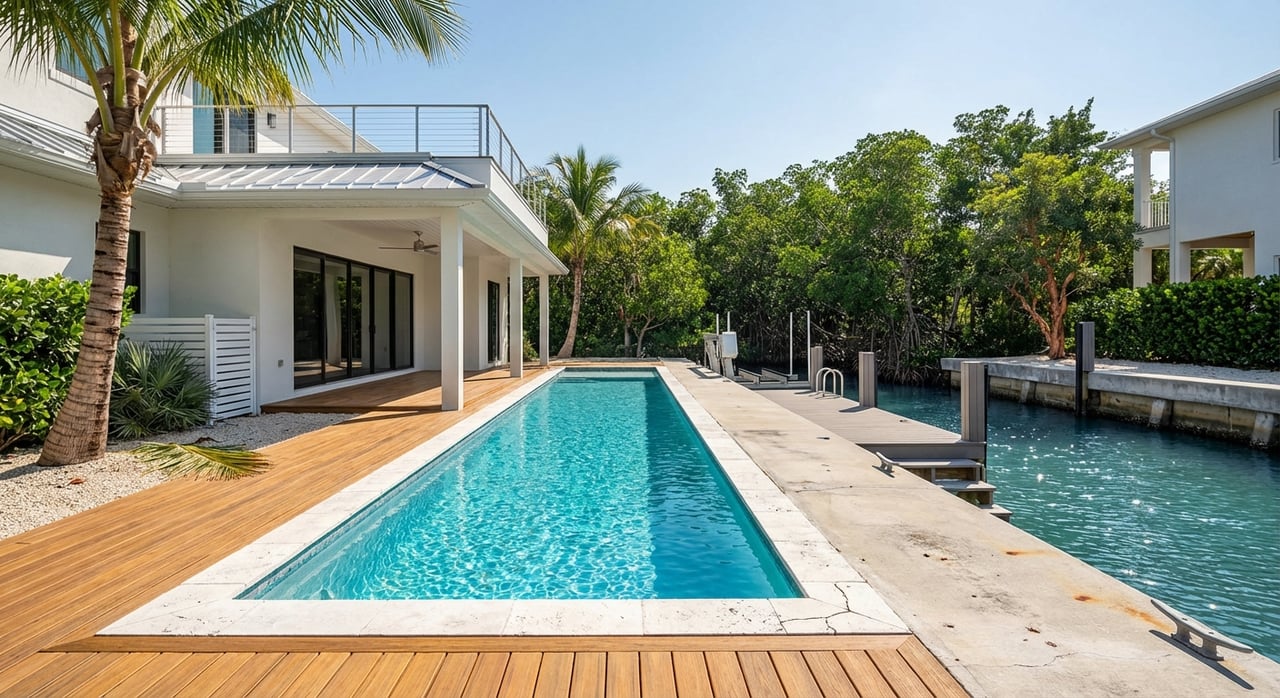
You already know the view is only part of the story. In Key Largo, the waterfront you choose sets the pace for your boating, how you maintain your shoreline, and even your long‑term resale. It can feel tough to compare oceanfront, bayfront, and canal-front when each looks beautiful for different reasons. This guide breaks down the real trade-offs so you can match the right shoreline to your lifestyle and boat. Let’s dive in.
Key Largo waterfront types at a glance
Key Largo sits between the Atlantic Ocean to the east and Florida Bay to the west. Oceanfront means Atlantic-facing shoreline with quick access to the reef and blue water. Bayfront faces Florida Bay or the inner sounds with protected, open-water views and calmer conditions. Canal-front places you on interior canals that connect to larger channels, often with a private dock at your back door.
Water levels matter. The Keys are microtidal, so low and high tide can create real differences in depth on flats, channels, and canal approaches. Always check local NOAA tide predictions for your specific area and date before heading out. You can view nearby stations and forecasts on the NOAA tides portal for Ocean Reef Harbor and Key Largo areas at the NOAA Tides & Currents station inventory.
You will also see the influence of John Pennekamp Coral Reef State Park and the Florida Keys National Marine Sanctuary offshore. These protected areas shape where you can anchor, how you approach reefs, and what kind of in‑water work may be permitted along ocean-facing shorelines.
Boating access and daily convenience
Oceanfront: fastest offshore access
If you want the shortest run to the reef, diving, or blue-water fishing, oceanfront is the gold standard. You head straight out to the Atlantic and reach popular reefs quickly. The sanctuary maintains a network of free mooring buoys so you can tie up without anchoring on coral. Review the sanctuary’s mooring buoy map to see how access aligns with your favorite dive or snorkel spots.
Expect more exposure to wind and swell when seas are up. On some oceanfront parcels, nearshore reef and currents can make swimming directly off the property less comfortable compared with protected waters.
Bayfront: calm water and flats access
Bayfront puts you on Florida Bay with protected, open-water views and quick access to calm waters favored by skiffs, kayaks, and family cruising. Many bay areas are shallow, so tide knowledge and local routes matter. The local seagrass and flats ecology is an important part of the Keys environment, which is why there are sanctuary protections and anchoring rules in sensitive areas. Explore the bay’s protected habitat context through NOAA’s overview of reef and seagrass resources to understand how this affects daily boating choices.
Canal-front: private dock, variable access
Canal-front often wins for everyday convenience: step outside, load the boat, and go. Depths and access vary across neighborhoods. Some canals were dredged and connect efficiently to main channels. Others are narrower, shallower, or require a longer idle to reach open water. Verify your specific route, including controlling depths at low tide, before you buy.
Dock rules are not one-size-fits-all. Monroe County’s Land Development Code sets standards for docks, lifts, and how much of a canal’s navigable width a structure can occupy. If you plan to build or modify a dock, review the county’s shoreline and dock provisions and confirm any existing permits recorded for the property. Bridge and overhead clearances also vary in the Keys, so sailboat masts and tall profiles should be verified along your planned route.
Lifestyle trade-offs and environment
Oceanfront: pros and cons
Pros:
- Quick offshore runs for fishing, diving, and cruising.
- Direct ocean views with an elevated sense of privacy on larger frontages.
- Access to reef systems with sanctuary mooring buoys available at many sites.
Cons:
- Higher exposure to wave energy, storm surge, and shoreline erosion.
- Swimming directly off the lot can be less comfortable in some areas due to reef and currents.
- Shoreline protection is tightly regulated. Agencies often prefer living-shoreline or riprap designs over vertical seawalls where feasible. Florida Sea Grant gives a useful overview of living shoreline approaches.
Bayfront: pros and cons
Pros:
- Calmer water for skiffs, kayaking, and relaxed cruising.
- Sunset-facing views and frequent wildlife activity.
- Often comfortable for tendering and day-to-day use in lighter wind.
Cons:
- Many areas are shallow with extensive seagrass and flats. Anchoring and seagrass protections apply in many zones.
- Long-term sea-level rise can affect low-lying flats and shorelines over time.
Canal-front: pros and cons
Pros:
- Most sheltered conditions with a private dock next to the home.
- Easy loading, maintenance, and routine boat use.
- In lawful, dredged canals, you may support larger lifts and deeper slips subject to permits.
Cons:
- Depths and widths vary by canal and can limit draft or beam.
- Wake and traffic in busier canals can influence seawall wear.
- Docks and seawalls are regulated. County rules limit how far structures extend and aim to protect navigability and nearby habitat.
Permits, insurance, and cost expectations
Multi-agency permitting
In the Keys, dock, lift, seawall, or dredge projects usually require review from multiple agencies. Expect federal review from the U.S. Army Corps of Engineers, state oversight for submerged lands, sanctuary resource checks, and Monroe County permitting. The U.S. Army Corps describes a local Regional General Permit for certain routine activities. Review their guidance for RGP SAJ‑82 so you understand typical scope and limits.
If you need to build or replace a dock, FKNMS may request a benthic survey and bathymetry before its review even begins. Monroe County’s Land Development Code details setbacks, adjacency rules, and navigable-width protections that shape design options. Budget time and professional help for surveys, engineering, and agency fees.
Flood and wind insurance
Most of the Keys falls within FEMA coastal flood zones that drive lender and insurance requirements. Before you commit, pull the property’s FIRMette and any Elevation Certificate so you can pre-quote flood insurance and understand base flood elevations. Use FEMA’s Flood Map Service Center to locate official flood mapping. Wind coverage, deductibles, and carrier availability also vary by property. A Keys-experienced insurance broker can frame realistic carrying costs.
Shoreline and dock maintenance
Every shoreline type comes with upkeep. Vertical seawalls and bulkheads will need eventual repairs or replacement. Living shorelines and riprap have different maintenance cycles and may offer ecological benefits. For a high-level overview of design trade-offs and care, Florida Sea Grant’s living shoreline resource is a helpful starting point. Always use site-specific estimates from local marine contractors and engineers rather than generalized national figures.
Resale and market positioning
Buyer pools differ by waterfront type. Oceanfront often attracts premium buyers who value immediate offshore access and sweeping Atlantic views. Bayfront appeals to owners who want calm-water use and sunset orientation. Canal-front is popular with active boaters who prioritize private dockage and day-to-day convenience. Local snapshots show healthy but shifting demand across product types and price bands, so review current trends for your segment. A quick reference point is the Key Largo page in the regional market snapshot to calibrate big-picture momentum.
The takeaway for resale: choose the shoreline that best fits your boating and daily-use priorities, then buy the best execution of that type within your budget. Well-documented permits, solid shoreline condition, and verifiable depths add confidence and value.
Buyer due-diligence checklist
Use this to compare specific oceanfront, bayfront, and canal-front options:
- Confirm legal waterfront type and ownership lines. Check whether submerged land is sovereign or private and whether any dock or seawall permits are recorded. Start with Monroe County’s dock and shoreline provisions.
- Pull flood details early. Download the FEMA FIRMette and gather elevation data, then seek preliminary flood and wind insurance quotes so you understand carrying costs. Use FEMA’s Flood Map Service Center.
- Verify boating depths. Commission a recent bathymetric survey for your dock approach or canal and confirm controlling depths at low tide. Use local NOAA Tides & Currents to plan around tide swings.
- Gather documentation. Ask for recorded permits, maintenance records for docks and seawalls, surveys showing mean high-water line, and any HOA or shared maintenance agreements. Order a structural inspection if the dock is older.
- Check sanctuary rules and mooring options. Do not assume you can anchor or place private moorings near reefs. Review the sanctuary’s mooring buoy map and protection zones.
- Map your permit path. Expect multi-agency review for new in-water work. The U.S. Army Corps’ RGP SAJ‑82 overview provides a sense of timelines and thresholds.
- Match lifestyle to type. Be clear on your top priority: open-ocean runs, calm-water flats and sunsets, or private dock convenience with sheltered conditions.
How to choose your fit
- Choose oceanfront if immediate Atlantic access for diving and blue-water fishing is your top priority and you are comfortable with higher exposure and more complex permitting for shoreline work.
- Choose bayfront if calm-water boating, flats access, and sunset vistas define your ideal day, and you are ready to navigate tides and seagrass protections.
- Choose canal-front if daily boating convenience and at-home dockage come first, and you can verify lawful dredging, recorded permits, and controlling depths for your vessel.
When you focus on the shoreline that supports your real lifestyle, every other decision gets easier. Verify the technical pieces early, and you will own with confidence.
Ready to compare specific properties or calibrate value for your current home? For discreet, data-informed guidance across the Florida Keys, connect with Lisa Swanson. If you are selling, ask about the brand’s premium marketing and get your instant home valuation.
FAQs
What is the difference between oceanfront, bayfront, and canal-front in Key Largo?
- Oceanfront faces the Atlantic with direct reef and offshore access, bayfront faces Florida Bay with calmer protected water, and canal-front sits on interior canals with private dockage and variable routes to open water.
How do tides affect boating at Key Largo waterfront homes?
- Key Largo is microtidal, so low tide can limit depths on flats, channels, and canal approaches. Plan routes and departure times around local tide predictions for your exact location and date.
What permits do I need to build or repair a dock in Monroe County?
- Expect multi-agency review that can include U.S. Army Corps of Engineers, state submerged-lands oversight, sanctuary resource checks, and Monroe County approvals. Design is shaped by county dock standards, habitat, and navigability.
How can I check a property’s flood zone and likely insurance needs?
- Pull the FEMA FIRMette and any Elevation Certificate during due diligence, then request preliminary flood and wind quotes from a Keys-experienced broker to understand coverage, deductibles, and total carrying costs.
Are there rules about anchoring near reefs in the Florida Keys?
- Yes. The Florida Keys National Marine Sanctuary protects coral and seagrass. Use sanctuary mooring buoys where provided instead of anchoring on reefs, and confirm local rules before any overnight anchoring.