Wondering if a Cudjoe Key vacation rental can truly pay for itself? You are not alone. The Keys offer strong seasonal demand, but returns vary with water access, weather risk, and costs that are higher than most Florida markets. In this guide, you will learn a simple way to model ROI, the features that drive revenue in Cudjoe Key, and the key costs and compliance steps to check before you buy. Let’s dive in.
Why Cudjoe Key draws STR demand
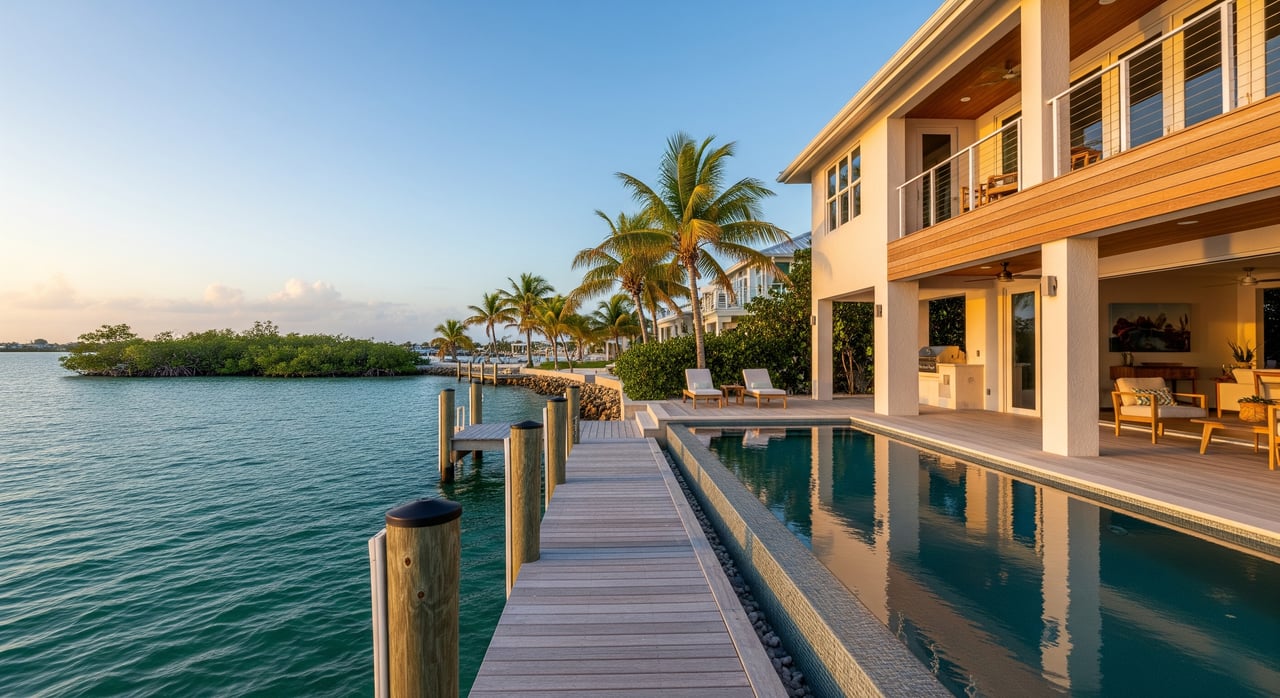
Cudjoe Key sits in the Lower/Middle Keys, close enough to Marathon and Key West for day trips, yet quiet enough for boaters and anglers. Winter and early spring are peak months, while late summer and early fall can be slower due to storm season. Guests value easy access to marinas, fuel, restaurants, and bait shops. Direct water access and dockage often command stronger pricing than comparable homes without it.
The ROI model you can trust
A clear, consistent framework helps you compare properties and avoid surprises. Use these definitions and formulas the same way on every deal. For formal definitions of cap rate and cash-on-cash return, you can review the explanations on Investopedia.
Estimate revenue: ADR and occupancy
- Start with two variables: average daily rate (ADR) and occupancy rate.
- Annual gross rental revenue = ADR × occupancy rate × 365.
- Add any net cleaning fee revenue you keep after paying your cleaner.
- Set minimum stays by season to reflect how Keys owners price and manage calendars.
Calculate NOI, cap rate, cash-on-cash
- Net Operating Income (NOI) = Gross Rental Revenue − Operating Expenses.
- Cap rate = NOI ÷ Purchase price.
- Cash-on-cash return = Annual pre-tax cash flow ÷ Cash invested.
- If you use financing, subtract annual debt service from NOI to get pre-tax cash flow.
Model seasonality in the Keys
You will get better results if you model high and low seasons instead of a single annual average. Split the year into monthly or quarterly segments. Use higher ADR and occupancy for winter and early spring, with slower months during hurricane season. This approach captures holiday peaks, shoulder periods, and downtime when storms or maintenance limit bookings.
What drives revenue in Cudjoe Key
Revenue varies by property type and amenities. In the Keys, water access often outperforms other features, but every market segment is unique.
Private dock and water access
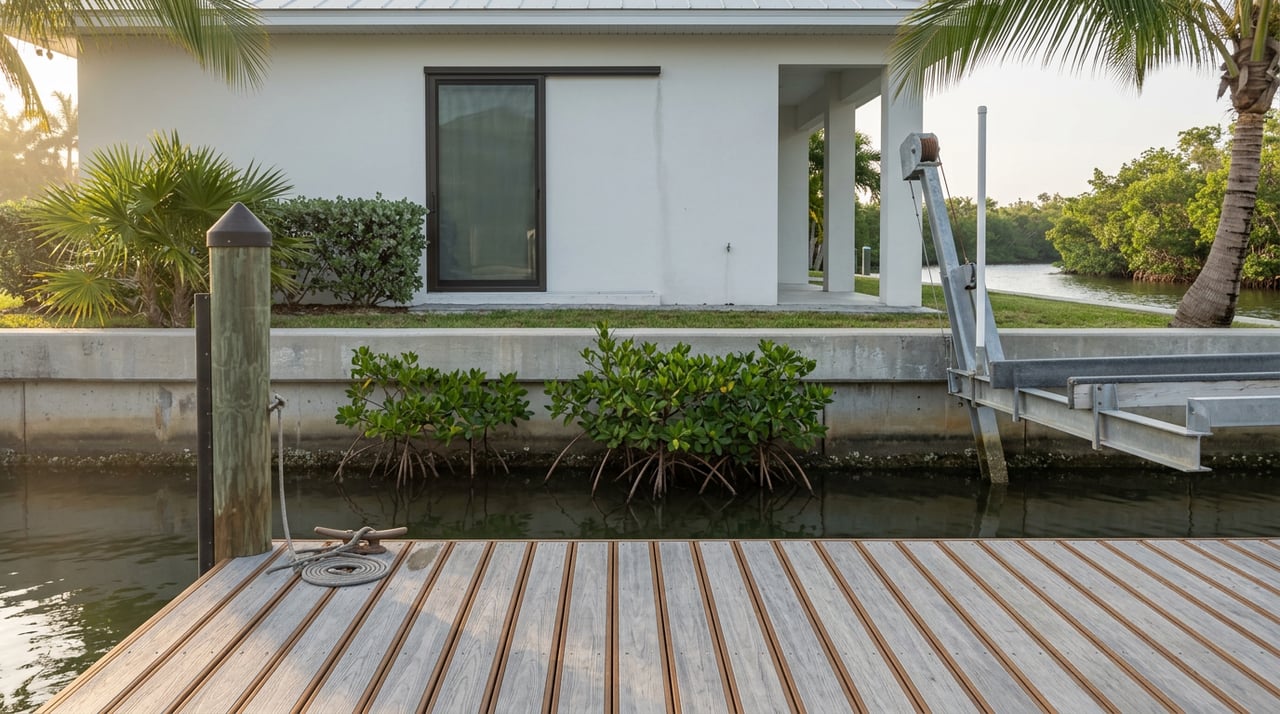
A private dock or boat slip attracts anglers and boaters who want multi-day charters and direct access to open water. Many guests choose dock-equipped homes first. When you model ADR, run two scenarios: with dock and without dock. The difference helps you decide how much to pay for water access.
Pool, layout, and amenities
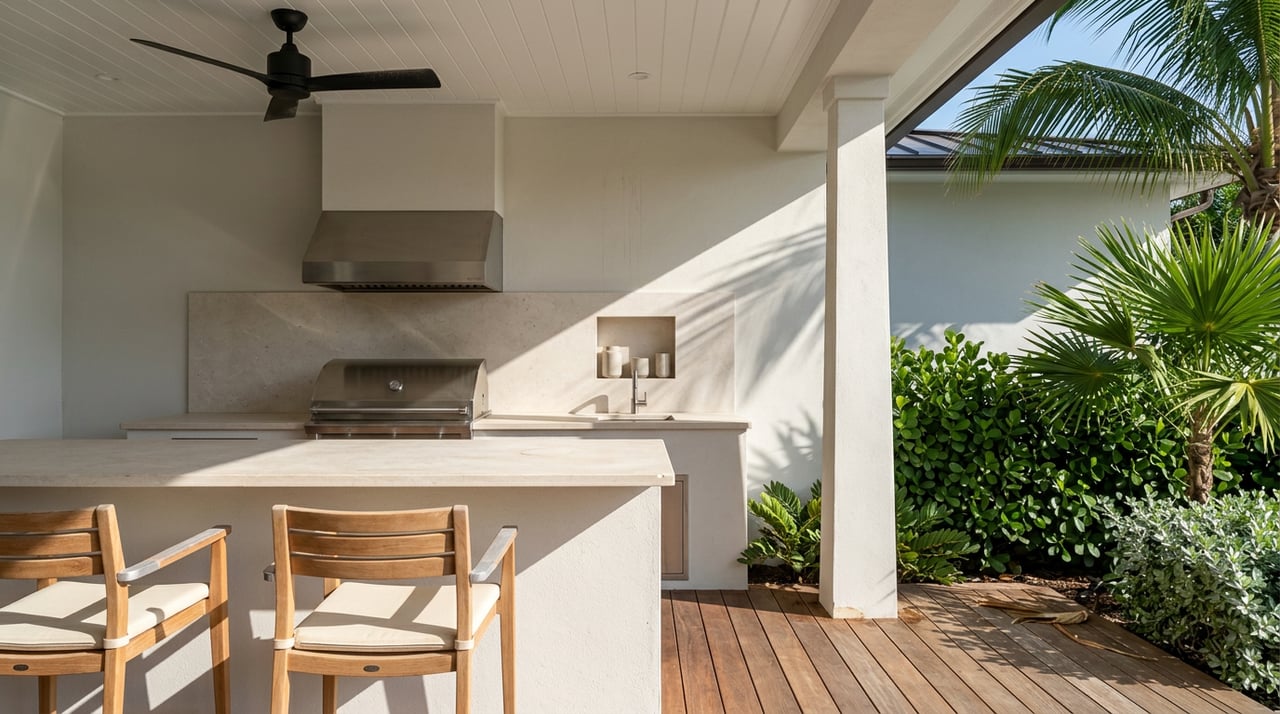
A pool can improve appeal and occupancy, especially for groups that want to relax at the home. It also adds to utilities, maintenance, and insurance. Size and layout matter for hosting comfort and cleaning logistics. Provide reliable Wi-Fi and straightforward parking to reduce friction and protect reviews.
Location and minimum stays
Proximity to marinas, fuel, bait shops, and restaurants supports higher rates and more repeat bookings. Use a 3 to 5 night minimum in high season and adjust around holidays to balance revenue and turnover. Keep cleaning fees in line with the market so you do not push away shorter stays during peak demand.
Typical expenses in the Keys
Expect coastal costs to run higher than inland markets. Use conservative numbers until you get real quotes.
Management and platforms
- Professional STR management in the Keys often ranges from 18% to 30% of gross rental revenue depending on service level.
- Platforms charge host fees and guests pay service fees. Budget for marketing or dynamic pricing tools if you self-manage.
Utilities, cleaning, maintenance
- Utilities rise with air-conditioning demand and refrigeration. Pools add to electric and water costs.
- Cleaning and turnover costs are usually paid by guests via a cleaning fee, but use the net you keep in your model.
- Ongoing maintenance and repairs often run 5% to 10% of gross revenue. Keep a reserve for roof, HVAC, and major items.
Taxes, insurance, HOA
- Property taxes vary by parcel. Check the county site for property records and trends.
- Insurance in the Keys is a big line item. You will likely need homeowners plus windstorm and flood coverage. Get multiple quotes.
- HOA or condo fees can be substantial and may include reserve contributions or special assessments. Always obtain the latest budget and any planned assessments in writing.
Compliance checklist before you rent
Short-term rentals in unincorporated Monroe County, which includes Cudjoe Key, have specific rules. Always verify current requirements before you buy or list a home.
- Confirm local STR rules and procedures on the Monroe County website. Review any registration, inspection, and enforcement pages.
- Read the county’s ordinances for rental use and safety requirements in the Monroe County Code of Ordinances.
- Register to collect and remit state sales tax and applicable transient taxes via the Florida Department of Revenue.
- Check if your rental needs a lodging license through the Florida DBPR.
- Review your flood zone and elevation using the FEMA Flood Map Service Center. Lenders and insurers often require flood insurance in certain zones.
- Evaluate long-term exposure with the NOAA Sea Level Rise Viewer.
- If you are exploring windstorm coverage options, learn about the Florida backstop insurer at Citizens Property Insurance.
- If a home is in an HOA or condo, obtain the rental policy, minimum-stay rules, and any approval or registration process in writing.
Build your numbers: step-by-step
Use this simple process to underwrite a Cudjoe Key property with confidence.
- Define the property. Bedrooms, baths, dockage, pool, views, parking, HOA, and location relative to marinas and services.
- Collect ADR and occupancy. Pull neighborhood-level trends from a data provider like AirDNA. Cross-check with manual Airbnb/VRBO research for listings that match your property type.
- Estimate gross revenue. Use ADR × occupancy × 365. Add net cleaning revenue you keep.
- Build the expense schedule. Include management, platform fees, utilities, maintenance, insurance, property taxes, HOA/condo fees, supplies, and reserves.
- Compute NOI, cap rate, and cash-on-cash. If using financing, subtract annual debt service before calculating cash-on-cash.
- Model seasonality. Enter monthly ADR and occupancy to reflect winter peaks and hurricane-season slowdowns.
- Stress test. Run ADR down 10% to 20% and occupancy down 5% to 15% to account for weather or demand shocks. Test insurance up 20% to 30% as well.
- Validate compliance. Confirm county rules, tax registrations, insurance requirements, and HOA policies before relying on any projected income.
Sensitivity example for Cudjoe Key
The numbers below are for illustration only. Replace them with actual quotes and market data gathered from your comps and vendors.
- Base case: ADR 450, occupancy 65%. Gross revenue = 450 × 0.65 × 365 ≈ 106,763. After expenses of 55,000, NOI ≈ 51,763. If purchase price is 950,000, cap rate ≈ 5.45%.
- ADR down 10%: New ADR 405, revenue falls to about 96,087. With the same expenses, NOI drops to ≈ 41,087. Cap rate falls to ≈ 4.3%.
- Occupancy down 10% (to 58.5%): Revenue ≈ 96,087, same as above. NOI ≈ 41,087. Cap rate ≈ 4.3%.
- Insurance up 25%: If insurance rises by 4,000, NOI falls by 4,000. A small change in one line item can move cap rate meaningfully at Keys price points.
What this shows: a dock, better location, and sharper calendar strategy can help protect ADR and occupancy. On the cost side, insurance and HOA assessments deserve early, realistic quotes.
Break-even occupancy quick check
A simple break-even formula helps you decide if a property can carry itself.
- Break-even occupancy = (Annual fixed costs + desired return) ÷ (ADR × 365 − variable costs per occupied night).
- Fixed costs include property taxes, insurance, HOA base fees, and management minimums. Variable costs include cleaning, supplies, and utility spikes tied to guest stays.
- Play with ADR and fixed costs to see how much occupancy you need in a slow year.
Next steps
- Pull real ADR and occupancy comps for a property that matches your target. Use monthly data to reflect seasonality.
- Get written quotes for insurance, utilities, and HOA or condo fees. Request a sample P&L from a local STR manager.
- Verify county permitting and state tax registrations. Confirm flood-zone requirements and elevation certificates.
- Run a conservative and a stress-case model. Compare both to your return targets before making an offer.
When you are ready to evaluate a specific Cudjoe Key property, connect with Lisa Swanson for local insight, data-driven underwriting support, and a tailored acquisition strategy across the Florida Keys.
FAQs
What months are peak season in Cudjoe Key?
- Winter through early spring typically see the strongest demand, while late summer and early fall are slower due to storm season. Model monthly ADR and occupancy to reflect this pattern.
How do I estimate ADR and occupancy for my home?
- Combine a data provider like AirDNA with manual Airbnb/VRBO comps that match your bedroom count, dockage, pool, and location. Use monthly data rather than a single annual average.
Which features most improve revenue in the Keys?
- Direct water access and dockage often command a premium. Proximity to marinas and services, plus a pool and strong presentation, can improve both ADR and occupancy.
What short-term rental rules apply in Monroe County?
- Start with the Monroe County website and read the Code of Ordinances for registration, safety, and enforcement details. Rules vary by area and housing type.
What taxes and licenses should I plan for in Florida?
- Register to collect and remit sales and transient taxes via the Florida Department of Revenue, and confirm any lodging license needs with the Florida DBPR.
How should I budget for insurance in the Keys?
- Get quotes for homeowners, windstorm, and flood coverage. Review flood zones using FEMA’s map center and explore Florida’s backstop insurer at Citizens Property Insurance. Costs are often higher than inland markets.