Shopping for a Keys home and seeing every listing call itself “waterfront”? In Monroe County, that word can mean very different things for your boat, your insurance, and your day‑to‑day life. The good news is you can decode it quickly once you know the local vocabulary. In this guide, you will learn how each waterfront type works in the Florida Keys, what it means for access and upkeep, and the key checks to make before you write an offer. Let’s dive in.
Key waterfront terms in Monroe County
Oceanfront or Atlantic‑facing
When a property directly faces the Atlantic with clear seaward exposure, it is typically described as oceanfront. You get big views, deeper water, and quick runs to reefs and wrecks. Expect more wind, waves, and salt spray, along with possible coastal construction setback rules where dunes or shorelines are present.
Gulf‑facing or bayfront
“Gulf” can mean the Gulf of Mexico side or protected bays like Florida Bay. Bayfront often indicates frontage on a sheltered body of water. You will usually find calmer conditions, broad flats, and great sunrise or sunset angles depending on the island and orientation.
Open‑water frontage
“Open water” signals unobstructed navigation and turning room, which is valuable for larger vessels. The practical question is whether you can reach big water without tight canals, shallow choke points, or low bridges. Larger boats often target this type for flexibility.
Canal‑front
Canal systems are common across the Keys and often include seawalls and private docks. Water depth varies by street and canal, and many canals are shallow at low tide. The most important factor is confirmed depth at mean low water and a clear connection to a deeper channel.
Backcountry, flats, or mangrove‑lined
These parcels border shallow channels, flats, or mangrove shorelines. They are prized for quiet, wildlife, and flats fishing. Draft limits and environmental sensitivity often make them unsuitable for deeper‑keel or heavier vessels.
Marinas, mooring fields, and private docks
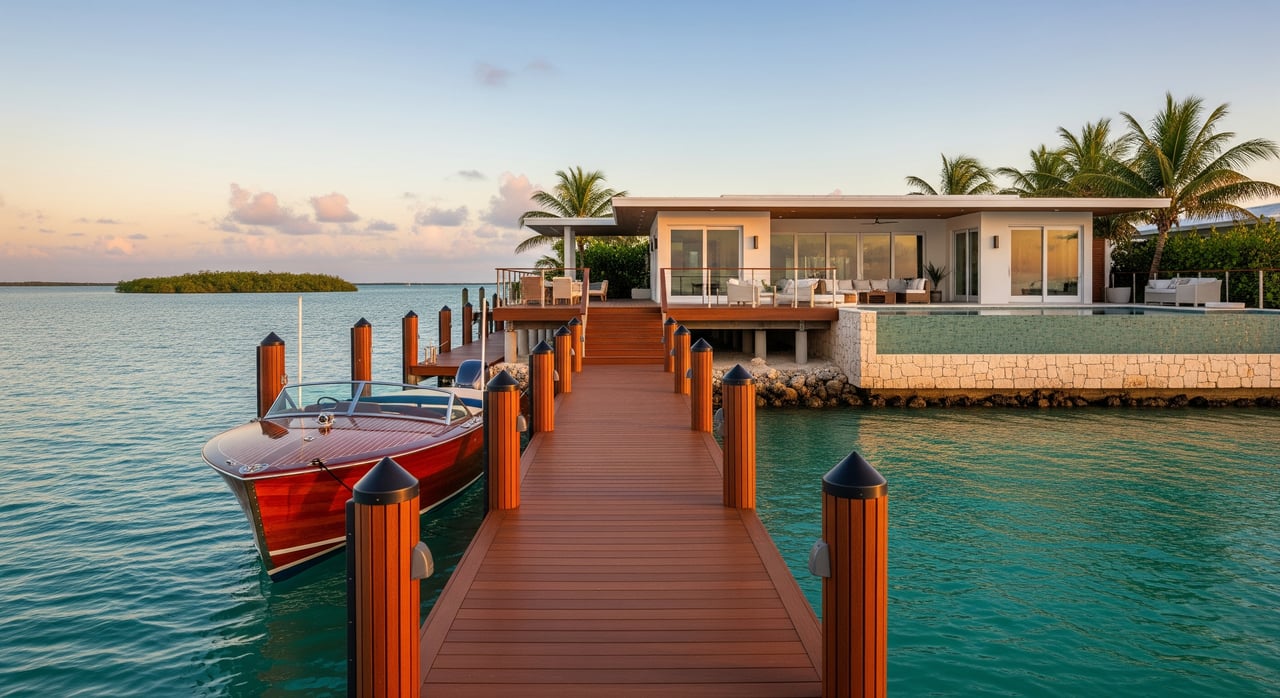
Mooring fields and marina slips are managed facilities with rules and fees. Private docks sit on your property and require permitting, maintenance, and sometimes engineering. Some buyers prefer marinas to avoid private dock upkeep, while others value the convenience of docking at home.
Boating access and daily life
Your vessel and your goals should drive your waterfront choice.
- If you run offshore: Oceanfront or open water typically offers the most direct route to reefs and blue water. Larger boats often favor these locations.
- If you love the flats: Bayfront and backcountry settings are ideal for poling skiffs, kayaking, paddleboarding, and sight fishing on the flats.
- If you want easy dockage: Canal‑front can be convenient for day boating. Just verify the canal depth at mean low water and the route to deeper channels.
Navigation matters. Fixed bridge clearances, occasional drawbridge schedules, and marked channels all affect how you move from the property to open water. Protected zones and seagrass areas also limit where you can anchor or motor.
Views shape lifestyle. Atlantic exposure often delivers sunrise views and open horizons. Gulf and bayfront settings frequently provide sunsets and calmer water. Consider wind exposure, privacy, and how you plan to use outdoor spaces.
Costs, insurance, and maintenance
Price premiums vary by frontage, usable depth, view, and access. As a general pattern, the premium often ranks from highest to lower as follows: direct oceanfront with deep water, direct open‑water frontage, deep‑access bayfront, canal‑front with confirmed depth, and shallow mangrove or backcountry water. Local comps by island and even by canal are essential for accurate valuation.
Flood and wind insurance are central to budgeting. Most waterfront in Monroe County sits in FEMA flood zones such as AE or VE, and VE areas trigger different elevation and insurance rules. The cost depends on flood zone, elevation relative to Base Flood Elevation, number of floors, mitigation features, and prior claims. Get an elevation certificate and insurance quotes early in your process.
Maintenance can be a major line item. Seawalls, docks, boat lifts, and hardware face constant salt, sun, and marine borers. Expect more frequent replacement cycles than inland structures. Mangrove trimming is regulated, and shoreline changes may require permits and possible mitigation.
Permits and environmental rules to know
Multiple agencies oversee shoreline work in the Keys. Monroe County manages local building and many dock or seawall permits. The Florida Department of Environmental Protection handles mangrove trimming, coastal rules, and sovereign submerged lands issues. The U.S. Army Corps of Engineers may be involved for dredging or certain structures. The Florida Keys National Marine Sanctuary enforces anchoring and coral protection rules. FEMA and the NFIP influence elevation and flood standards for construction.
Typical projects need one or more of the following: dock installation or repair permits, seawall replacement permits with engineered plans, mangrove trimming approvals, and submerged lands leases where public bottomlands are involved. The Coastal Construction Control Line and local setback rules can limit where and how you expand or rebuild.
Buyer due diligence checklist
Use this list before you commit to a waterfront home in the Keys:
- Verify water depth at mean low water at the dock and along the route to open water. Confirm navigability and any history of shoaling.
- Ask for all dock and seawall permits and any as‑built drawings. Check for open code cases or enforcement actions.
- Confirm flood zone and obtain a recent elevation certificate. Shop flood and wind quotes early, including windstorm deductibles.
- Review bridge clearances and any drawbridge schedules between the property and your fishing grounds or the reef.
- Clarify short‑term rental rules for the specific jurisdiction if income is part of your plan.
- Check utilities and wastewater status. Some islands rely on advanced systems with strict rules.
- Consider long‑term environmental exposure, including erosion and potential sea level impacts.
Investor notes: resale and rentals
Resale strength often follows usable depth, clean access to navigable water, and the condition of marine structures. Properties with documented dockage, clear permits, and legal short‑term rental status tend to market more easily to vacation buyers and investors. Be mindful of environmental risks that could affect future appreciation or lender comfort.
How I help you compare Keys waterfront
Choosing between oceanfront, open water, bayfront, or canal‑front is as much about your lifestyle as your balance sheet. You deserve clear guidance on value, risk, and the practical realities of owning on the water in the Keys. With boutique, concierge‑level representation backed by Berkshire Hathaway HomeServices, you get measured advice, polished marketing, and steady execution from first tour through close.
Ready to match the right waterfront to your goals? Reach out to Lisa Swanson for expert guidance and a streamlined path to your Keys home.
FAQs
What does “open water” mean in Monroe County listings?
- It usually indicates unobstructed frontage with room to turn and navigate, and a direct path to larger bodies of water without narrow canal constraints or low bridges.
How do bridges affect boat access from a Keys home?
- Fixed bridge clearances and any drawbridge schedules control what size vessel can reach open water from a property and may add time to every trip.
What should I know about flood insurance for oceanfront homes in the Keys?
- Most waterfront sits in FEMA flood zones such as AE or VE, and costs depend on flood zone, elevation relative to Base Flood Elevation, structure details, and prior claims.
Can I build or extend a dock on a Monroe County property?
- Many projects require county permits, possible state approvals, and sometimes U.S. Army Corps review, especially where seagrass or submerged lands are involved.
Are mangroves protected on waterfront lots in the Florida Keys?
- Yes, trimming and alterations are regulated, and you may need approvals and mitigation; unauthorized cutting can lead to enforcement actions.
How do short‑term rental rules affect waterfront investments?
- Rules differ by jurisdiction within Monroe County, and legal status can influence buyer demand and resale; always verify specific licensing and limits before you buy.
What maintenance costs should I expect for seawalls and docks?
- Seawall and dock work can be significant due to salt exposure and marine borers; budget for periodic repairs or replacements along with routine hardware and lift upkeep.